Saturday, January 1, 2011

Films Seen - 2011

Here are all the films I've seen that were officially released in 2011. If I've written a review of the film, a link has been provided.

50/50 (Jonathan Levine) ***1/2

The Adventures of Tintin (Steven Spielberg) **1/2

Albert Nobbs (Rodrigo Garcia) **

The Artist (Michael Hazanavicus) ****

Bad Teacher (Jake Kasdan) ***

Beginners (Mike Mills) ***1/2

A Better Life (Chris Weitz) ***

Bridesmaids (Paul Feig) ****

Cedar Rapids (Miguel Arteta) ***

The Change-Up (David Dobkin) **1/2

Circumstance (Maryam Keshavarz) ***

Cold Weather (Aaron Katz) **** 

Crazy, Stupid, Love (Glenn Ficarra, John Requa) ***

A Dangerous Method (David Cronenberg) ***1/2

Dear Lemon Lima (Suzi Yoonessi) ****

The Descendants (Alexander Payne) ****

Drive (Nicolas Winding Refn) ****

Extremely Loud and Incredibly Close (Stephen Daldry) **1/2

The Girl with the Dragon Tattoo (David Fincher) **
 
Goethe! (Philipp Stolzl) *1/2

Harry Potter and the Deathly Hallows Part 2 (David Yates) ****

The Help (Tate Taylor) **1/2

Hugo (Martin Scorsese) ***1/2

Horrible Bosses (Seth Gordon) **1/2

The Ides of March (George Clooney) **1/2

If a Tree Falls: A Story of the Earth Liberation Front (Marshall Curry) ***

The Iron Lady (Phyllida Lloyd) **

J. Edgar (Clint Eastwood) **

Larry Crowne (Tom Hanks) **1/2

Margin Call (J.C. Chandor) ***1/2

Martha Marcy May Marlene (Sean Durkin) ****

Mission Impossible: Ghost Protocol (Brad Bird) ****

Moneyball (Bennett Miller) ***1/2

The Muppets (James Bobin) ***1/2


My Week With Marilyn (Simon Curtis) ***1/2

Old Goats (Taylor Guterson) **1/2 

Our Idiot Brother (Jesse Peretz) **

Pirates of the Caribbean: On Stranger Tides (Rob Marshall) **1/2

Pleasant People (David Bonawits) *** 

Putty Hill (Matthew Porterfield) **** 

Rise of the Planet of the Apes (Rupert Wyatt) ***

Sahkanaga (John Henry Sumerour) ***1/2

Scream 4 (Wes Craven) **

A Separation (Asgar Farhadi) ***1/2

Shame (Steve McQueen) ***1/2

Silver Tongues (Simon Arthur) *

Source Code (Duncan Jones) ***1/2

Super 8 (JJ Abrams) ***1/2

Take Shelter (Jeff Nichols) ***1/2

Terri (Azazel Jacobs) ***1/2

Things Fall Apart (Mario Van Peebles) **

Thor (Kenneth Branagh) ***

Tinker Tailor Soldier Spy (Tomas Alfredson) ***

The Tree of Life (Terrence Malick) ***

Warrior (Gavin O'Connor) ***

We Are the Hartmans (Laura Newman) ***

War Horse (Steven Spielberg) **1/2

Warrior (Gavin O' Connor) ***

We Bought a Zoo (Cameron Crowe) ****

Win Win (Thomas McCarthy) ***

X-Men: First Class (Matthew Vaughn) ***

Yellowbrickroad (Jesse Holland, Andy Mitton) ***1/2


Young Adult (Jason Reitman) ***


Friday, November 19, 2010

Harry Potter and the Deathly Hallows Part 1 (David Yates, 2010) ***


Dir. David Yates
Starring  Daniel Radcliffe, Emma Watson, Rupert Grint, Ralph Fiennes

I have had an odd relationship with the Harry Potter franchise. I saw the first five films without reading the books beforehand, but then read all the books right after that fifth film. I've always been a big proponent of judging film adaptations on their own merits apart from the original books. However, that's easier said than done, a realization I've come to with these last two films, both of which I've liked but couldn't completely get past some crucial changes that were made that somewhat water down the emotional impact of a fascinating story.

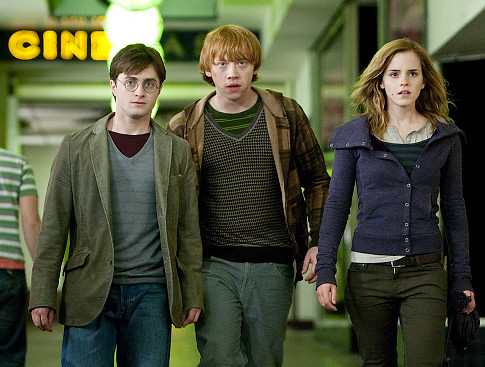
The latest entry covers events in the first half of the 7th and final book. The familiar trappings of Hogwarts are now gone, Dumbledore is dead, and anyone who is not a pureblood wizard is in grave danger. Harry (Daniel Radcliffe) and his faithful friends Ron (Rupert Grint) and Hermione (Emma Watson) are now on the run, while attempting to locate the final four Horcruxes that contain fragments of Lord Voldemort's (Ralph Fiennes) soul. Locating and figuring out how to destroy them takes them on a dark and frightening journey that seriously tests the strength of their friendship.

There is no doubt that the film is well made. Director David Yates helmed the last two entries (Half-Blood Prince, Order of the Phoenix), which were remarkably consistent with their tight pacing and confident visuals.  For the most part, that is the case for this one as well. One notable exception is the Seven Potters sequence, which relies too heavily on quick jump cuts and doesn't get really exciting until it starts to focus solely on Harry and Hagrid. Other than that, Yates does a solid job with the several suspense sequences, including a harrowing visit to the Ministry of Magic featuring a return from one of the series' best villains, Dolores Umbridge.

There are three major omissions and/or changes from the book. The first happens very early into the film, when the exit of the Dursley's is chopped up into two lines of dialogue. The second is when Kreacher's tale is pretty much completely excised from the film. The third, and most egregious, change is the final fate of Wormtail, which makes his reappearance in this film almost completely pointless. Dispensing with Kreacher's story is an acceptable omission in light of the time it would've taken. However, the other two sequences, both notable emotional high points in the story, could've been properly done with adding at most 5 total minutes to the running time.

However, it should also be noted that there were a few changes that actually worked very well. There's a train sequence early in the film that gives a nice little moment for Neville, my favorite character in the series, setting him up for events in the final film. Amidst all the darkness, there are a few moments of levity cleverly sprinkled in that keeps the story from being unbearably dark. And one of the biggest weaknesses in the book was actually improved on, as Yates does a terrific job pacing us through the endless forest sequences, even adding some amusing touches like a little dance number between Harry and Hermione.

The main three cast members have now improved well beyond their limited range in the first few films. Rupert Grint has made the most remarkable transition, as this film finally gives him something other to do than be a clown, and he superbly handles his powerful emotional scenes. Still, there are a few moments where the emotional moments seem to be oddly restrained. A notable example is a scene in the forest where Hermione's anger seems oddly restrained compared to the ferocity she was described with in the book. There’s also a slight change in the Malfoy Manor sequence that robs Rupert Grint of a very powerful moment.

Despite my gripes, this remains a solid piece of filmmaking. The movie does capture the book's major themes of friendship and equality very well. In the Harry Potter universe, staying true to your friends to the very end and treating others with respect despite their differences are personal qualities of the highest order. And in an era fraught with so much divisiveness and where not everyone can marry or join the military, it remains a poignant tale whether you're watching the movie or reading the book.

Sunday, November 14, 2010

10 Great Movie Scenes

There is no rhyme or reason to this list. These are not necessarily the greatest in movie history (although some would probably make that list), but just ten that I thought of and found on Youtube. It is a mixture of newer films and classics. They are ordered alphabetically.


Almost Famous - Cameron Crowe's films are always filled with these wonderfully original moments and this scene, where the protagonists forget about all of their recent squabbles and bond once again over their love of music, is probably his finest moment as a director.


American Madness - One of the pleasures of my Top 10 Movie Project is finding lesser known Capra films like this one that are just as good as some of his beloved classics. In this scene, Walter Huston makes a compelling case for honesty and trust as business virtues that are more important than profit.


The Apartment - Billy Wilder's Some Like it Hot is deservedly well known for having one of the best closing movie quotes in history, but this final scene to The Apartment also has a wonderful closing line. Yes, this is a spoiler so if you haven't seen the movie, then skip this scene (and add it to your Netflix queue immediately).


Back to the Future - What? You thought Back to the Future wouldn't make this list. Lots to choose from, but I picked the fun chase scene in town square punctuated by Alan Silvestri's terrific score.


The Circus - Here we have Chaplin's most underrated film and the funniest of the ones I've seen so far (and that includes City Lights and The Gold Rush). In this scene, Chaplin brilliantly uses a carnival funhouse for much hilarity.


Miracle Woman - Another lesser known Capra classic, this film features Barbara Stanwyck in one of the best individual performances I've ever seen in a film. Here is her amazing opening monologue.


The Player - The 80s were not kind to Robert Altman, but he returned with a bang in the 90s with The Player, a wonderful Hollywood satire/murder mystery. This is the opening scene to the film and is one of the best tracking shots in film history.


Rocky - Another film with lots of memorable moments to choose from, but I picked the most dramatic moment of the final fight, where a brutalized Rocky wills himself up off the mat with Bill Conti's brilliant score. Look at Apollo's reaction.


Safety Last! - When it comes to silent comedy, Charlie Chaplin and Buster Keaton get all of the attention, but recently people have been paying attention to the great Harold Lloyd. Safety Last! is his best remembered classic and this daring climbing scene is one of the best sequences in silent film history.


Up - Pixar is amazing. We all know that. Here they are at their finest in a heartbreaking montage that should make even the most hardened cynics weep uncontrollably.


Saturday, October 30, 2010

Let Me In (Matt Reeves) ***


Dir. Matt Reeves
Starring Kodi Smit-McPhee, Chloe Moretz, Richard Jenkins, Elias Koteas

I have to admit to being incredibly skeptical of this film from the moment I heard about it. After all, this is an English language remake of 2008's Let The Right One In, a masterpiece made by Swedish filmmaker Tomas Alfredson. I was certain that they would screw this up based not only on Hollywood's reputation for adapting foreign films, but also because director Matt Reeves really dropped the ball in his directorial debut Cloverfield and the lead female role went to cutesy preteen star Chloe Moretz. I was mostly relieved that this turned out to be an honest attempt to match the spirit of the original without dumbing it down for American audiences.

The story is completely faithful to the original. Bullied teen Oscar (Kode Smit-McPhee) notices a mysterious girl named Abby (Chloe Moretz) move into a nearby apartment with her father (Richard Jenkins). He's quickly smitten with Abby, who helps convince him to fight back against the school bully, only to soon find out that she is a vampire. Meanwhile, a detective (Elias Koteas) investigating mysterious deaths in the town seems to be zeroing in on the culprit.

There are some really disturbing aspects to the first film and I'm impressed that the filmmakers and especially the studio did not water this down one bit, particularly a really uncomfortable moment between Moretz and Jenkins. It's just as creepy and upsetting as the original story. This is essential to creating the exceedingly dark atmosphere for the central characters to operate in. It's not at all what you think when you hear "vampire movie". There are no sparkly vampires to be found here. Nor are there any over the top action sequences. This is serious business.

Reeves' Cloverfield was derailed because the characters were incessantly annoying  It was really hard to care about any of them. On top of that, the dialogue was putrid and insulting to the audience's intelligence. Therefore, this adaptation was perhaps a perfect vehicle for Reeves to tackle. The film is less dialogue heavy than Cloverfield and Reeves seems to have a much easier time exploring characters visually. The source material gave him a fascinating set of characters to work with and he understands each of them very well. Also, the casting proved to be much less problematic than I had feared (Moretz is very good, even if she doesn't approach the brilliance of the original's Lina Leandersson).

However, the fact that Reeves has done such a good job capturing the tone and spirit of the original actually makes this remake feel even more pointless. Who is this film aimed at? It's doubtful that audiences who scoff at reading subtitles in the first place would enjoy such a dark and uncomfortable story. People that loved the original already know what happens, diminishing the impact of the story's wonderful surprises. This is perhaps a bit unfair. Certainly, I'd also be complaining if he had heavily altered the film to make it more marketable for a wider audience. So it's pretty much a no win situation, which is usually the case when you remake a great foreign film that is only two years old.

Thursday, October 28, 2010

1932 Year in Review and Top 10

Another year is now complete, the sixth since I started this project. 1932 turned out to be a very good year at the movies, as filmmakers finally got comfortable with the new sound format and the staginess of the early talkies began to disappear. This was also the pre-code area, so directors were allowed to be a little more risque', which I think is evident byt he films that populate my top 10 list.

The changing of the guard had taken full effect by now, as only a few of the successful silent directors were still making quality films, the most notable being Josef Von Sternberg and Ernst Lubitsch. Harold Lloyd is the only silent comedy star that I saw in 1932, albeit his entry was a pretty good one that suggests his talkie ventures were better than they've been remembered. There was another hidden gem from Frank Capra, who was still two years away from making his first well known classic (It Happened One Night).


Reviews of all films I saw from 1932 can be found here. Without further ado, here are my choices for the top 10 films from 1932...


10. Shanghai Express (Josef Von Sternberg)


9. I Was Born, But.... (Yasujiro Ozu)


8. One Hour With You (Ernst Lubitsch)


7. The Old Dark House (James Whale)


6. One Way Passage (Tay Garnett)


5. Me and My Gal (Raoul Walsh)


4. Freaks (Tod Browning)


3. American Madness (Frank Capra)


2. I Am a Fugitive From a Chain Gang (Mervyn LeRoy)


1. Trouble in Paradise (Ernst Lubitsch)


Best Director

Tod Browning, Freaks
Frank Capra, American Madness
Mervyn LeRoy, I Am a Fugitive From a Chain Gang
*Ernst Lubitsch, Trouble in Paradise
James Whale, The Old Dark House


Best Lead Actor

*Walter Huston, American Madness
Herbert Marshall, Trouble in Paradise
Paul Muni, I Am a Fugitive From a Chain Gang
Edward G. Robinson, Two Seconds
Spencer Tracy, Me and My Gal


Best Lead Actress

Joan Bennett, Me and My Gal
Marlene Dietrich, Shanghai Express
*Miriam Hopkins, Trouble in Paradise
Jeanette McDonald, One Hour With You
Barbara Stanwyck, Forbidden


Best Supporting Actor

Edward Ellis, I Am a Fugitive From a Chain Gang
Preston Foster, Two Seconds
*Jean Hersholt, Grand Hotel
Frank McHugh, One Way Passage
Pat O'Brien, American Madness


Best Supporting Actress

Joan Crawford, Grand Hotel
Constance Cummings, American Madness
*Kay Francis, Trouble in Paradise
Aline McMahon, One Way Passage
Genevieve Tobin, One Hour With You


Best Screenplay

American Madness
Freaks
Me and My Gal
Two Seconds
*Trouble in Paradise


Best Editing

American Madness
*I Am A Fugitive From a Chain Gang
One Way Passage
Two Seconds
Trouble in Paradise


Best Cinematoraphy

*A Farewell to Arms
I Am a Fugitive From a Chain Gang
The Old Dark House
One Way Passage
Trouble in Paradise


Best Costume Design

Grand Hotel
Movie Crazy
One Hour With You
*Shanghai Express
Trouble in Paradise


Best Art Direction

Freaks
Grand Hotel
Movie Crazy
*The Old Dark House
Trouble in Paradise

Wednesday, October 27, 2010

Movie Reviews - 1932 (Top 10 Movie Project)

Here are all the movies I saw from the year 1932. This was for my Top 10 Movie Project, in which I watch the best movies of each year (starting with 1927) and at the end doing a year end write up with a top 10 list. The original format was doing individual reviews of each film, but that proved to be too time consuming, so I've switched a single page for all reviews from the year. In a separate post, I will do the yearly write up and top 10 list. Movies are rated on the classic **** scale.


American Madness (Frank Capra) ****

Starting to get boring to say, but this is yet another early Frank Capra film that is a hidden classic. The plot, about a bank owner who strongly believes in earning the trust of the people and works feverishly to keep that trust, has a compelling relevance to modern events. Walter Huston (ridiculously bad in DW Griffith's Abe Lincoln biopic) is absolutely terrific here as one of the most fundamentally decent men in movie history (he almost makes Forrest Gump look like an asshole). Any lesser performance and it would come off as pure cheese. Capra populates the film with interesting subplots that work together wonderfully and builds to an exciting climax.


Arsene Lupin (Jack Conway) ***

Definitely a fun crime caper with Lionel and John Barrymore making for very entertaining adversaries. Lionel plays the noted Detective Guerchard, who is now on the trail of Arsene Lupin (played by John). Conway kleeps things light throughout and lets the two leads shine. One of the few problems I had with the film was the story making Guerchard an idiot too often, allowing Lupin to constantly escape. If he's a great detective, we don't get to see much of that. However, the constant failures do provide some good character moments for Lionel to play. Good solid fun.


Beast of the City (Charles Brabin) **1/2

Shockingly violent (for the era) tale of a police chief who's had enough of organized crime terrorizing his city and decides to fight fire with fire. Walter Huston tackles the lead role with his usual charisma, but Brabin does a terrible job staging many of the key scenes. The climactic moment is so poorly done that it became comical and much of the dramatic momentum is completely ruined. With all the risks they took in pushing the envelope for a more realistic portrait of organized crime, it's a shame they didn't get the basics right.


Blonde Venus (Josef Von Sternberg) **

Marlene Dietrich has a magnificent screen presence, but even that can't overcrome a character is intensely unlikeable. Von Sternberg's films are always skillfully crafted, but this story about a woman who essentially kidnaps her son so she can live the lifestyle she wants is so ridiculous that no amount of talent can overcome it. Look for an early Cary Grant performance as a sleazy socialite.


Emma (Clarence Brown) **1/2


An above average little melodrama with some good performances that elevate it above the general hokiness of the story. The wonderful Marie Dressler is a housekeeper well loved by the children she's raised, but that all changes when she marries their father (Jean Hersholt, always a pleasure). Dressler creates a memorable character, but the story gets too ridiculous to take seriously.

 
A Farewell to Arms (Frank Borzage) **

I've been a big fan of Borzage's romantic melodramas. Films like Seventh Heaven, Lucky Star, and even Liliom have combined serious romantic stories with memorable visual backdrops and fantastic lead performances. Borzage's adaptation of the Hemingway novel A Farewell to Arms contains much of what made his previous films so good, but there is a very serious flaw that derails the entire film and that is the performance of Helen Hayes. This is the third film I've seen her in now and she's been awful in every one. She has a great reputation, so maybe later films will sowcase her talent, but in this one she fails miserably at creating an interesting character or even convincing us that she's in love with Gary Cooper (shouldn't be a difficult task!). A major disappointment.


Faithless (Harry Beaumont) **

Not much to say here. This is a soap opera about wealthy people during the depression, but this is a story that is flat from minute one. Talulah Bankhead's presence certainly commands your attention, but her line delivery is extremely wooden. She actually seems bored here and I can't say I blame her. 


Forbidden (Frank Capra) ***1/2

Lonely woman (Barbara Stanwyck) takes her life savings and goes on a glamorous vacation, where she ends up falling for a sophisticated man (Adolph Menjou) who just happens to be married. Despite this, their romance blossoms into a long term affair. This is not quite as good as other early Capra pictures, but it is a good solid soap opera that features another sublime performance from Stanwyck, who at this point was probably the best actress of her generation.


Freaks (Tod Browning) ****

Freed from the constraints of adapting a popular novel that doomed him in Dracula, Browning puts together another classic cinematic tale, this one about a group of odd circus performers and what happens when one of them falls in love with the beautiful Trapeze Artist. Like with The Unknown, Freaks takes you in so many unexpected directions and is one of the few films that will really shock you. It's quite an adventure. The final shot in the film is one I'll never forget.


Grand Hotel (Edmund Goulding) ***

This film is an early Oscar winner that, like Broadway Melody, is often held up as one of the worst Best Picture choices ever. While it certainly isn't even close to the best film of the year, it is much, much better than many other films that have attained that honor. In fact, it accomplishes pretty much exactly what it set out to do, which is give audiences a chance to see a bunch of big name, legendary stars (Greta Garbo, John and Lionel Barrymore, Wallace Beery, Joan Crawford) in one film and throw them together in melodramatic storylines to see the fireworks fly. And on that level, the film works pretty well. Everyone in the big name cast does very well, but Joan Crawford simply steals the movie with a surprisingly sensitive and undeniably winning performance. Jean Hersholt also shows up with another one of his memorable supporting roles.


Horse Feathers (Norman McLeod) ***1/2

One of the better Marx Bros. films and a definite improvement on the overrated Animal Crackers. The college setting is perfect for creating some hilarious scenarios for the cast to interact. I still think the early sound film Cocoanuts is actually the best Marx Bros. film I've seen to date, but this one ranks right up with it because they waste less time with a pointless story and simply set up funny situations.


I Am A Fugitive From a Chain Gang (Mervyn LeRoy) ****

An uncompromising and brutal film that exposes life in a southern chain gang prison. The film was so effective for its time that the filmmakers were sued by the state of Georgia, which is where the real life incident that inspired the film took place, although no specific state is named. Paul Muni is terrific in the lead role, delivering a nuanced performance of a man who goes through many changes throughout the events in the story. LeRoy pulls off a piece of cinematic history with a brilliant editing choice in the film's closing moments


I Was Born, But... (Yasujiro Ozu) ***1/2


Another film that showcases Ozu's wonderful gift for light comedy. This one follows two boys who have moved to a new city and have difficulties fitting in at their new school. Major embarassment ensues when they see their father sucking up to his boss, who is the father of one of the other students. This is a wonderful story where characters react naturally to situations and the drama unfolds in a fluid manner. I've got a long way to go before I get to Ozu's most recognized classic Tokyo Story, but it sure feels like it'll be a great journey to get there.


Love Me Tonight (Rouben Mamoulian) ***1/2


Maurice Chevalier and Jeanette Mcdonald made a name for themselves with their splendid turns in Ernst Lubitsch's late 20s/early 30s musicals, two of which they appeared in together and showcased their remarkable chemistry. Director Rouben Mamoulian, working with a very thin plot, recognizes what he has and simply focuses on highlighting McDonald and Chevalier as much as possible. So yeah, the story isn't worth anything, but so what? Watching these two greats work together is a wonderful treat.


Me and My Gal (Raoul Walsh) ****

One of the best discoveries of the year. Me and My Gal is simply a terific film that does a brilliant job of mixing genres and working on multiple levels. Spencer Tracy is a young policeman that falls in love with a wisecracking waitress played by Joan Bennett. The sarcastic banter between them is hilarious and creates a wonderful romantic chemistry. On the other hand, the film also features a strong side story about gangsters and corruption. The film is filled with wonderful dialogue and a large cast of well drawn characters. This is terrific entertainment.


Movie Crazy (Clyde Bruckman) ***1/2

The second Harold Lloyd talkie I've seen and yet again I'm wondering why his sound films are given so little attention. Maybe this doesn't quite approach the level of Safety Last! or Speedy, but it is still a very funny film that executes a fun premise very well. This time, Harold has adventures trying to make it as an actor in Hollywood and falls for a woman (the lovely Constance Cummings), not knowing this exotic beauty is the same person as his actress friend. There are many good jokes involving this deception and Harold's voice is a perfect match for his plucky on screen persona.


The Mummy (Karl Freund) *1/2

Much like many other early 30s horror films, The Mummy falters with a leisurely paced story that doesn't pick up at all until about the last 15 minutes. Now I'm not to one to criticize a horror film for attempting to develop characters and create an interesting backdrop, but the attempt at doing both of these things is absolutely dreadful here. This is a really boring movie.


The Old Dark House (James Whale) ***1/2

This one is a nice surprise and much better than Whale's unimaginative and weakly paced "classic" Frankenstein (not to mention many other horror films of the era, many of which I've reviewed on this very page). Whale takes the classic haunted mansion concept and breathes life into it with wonderfully staged suspense moments and invests time in developing an interesting group of character we care about. Some of the work Whale does with the camera here is very advanced for the early sound era and helps create a vivid atmosphere. If you're looking for classic horror, skip many of the better known classics and start here instead.


One Hour With You (Ernst Lubitsch) ***1/2

Maurice Chevalier and Jeanette McDonald team up with Lubitsch for the last time. Watching these two together under the direction of such a master is just pure movie magic. There's a really fun story here. The two stars play a married couple whose bliss is interrupted by the wife's flirtatious friend Mitzi (a wonderful Genevieve Tobin). The story is told with the typical Lubitsch flair for light comedy and fanciful songs. Having now seen 9 Lubitsch films, I can safely say he is one of my favorite all time directors.


One Way Passage (Tay Garnett) ****

This little known gem was a nice surprise. Tay Garnett's shipboard romance plays very much like the best Frank Borzage melodrama that Borzage never made. The story follows two doom travelers: Dan (William Powell) is a criminal who has been taken into custody and awaits his fate when the journey is over; Joan (Kay Francis), who is suffering from a terminal illness. What's really special about the film is that despite such an overwhelmingly depressing setup, Garnett is able to setup a whimsical tone and keep the film from becoming unbearable. The two leads are incredible together and the screenplay is populated with memorable supporting characters.


Prosperity (Sam Wood) **1/2

It's always a pleasure to see Marie Dressler and she gives another fun performance as the owner of a small town bank struggling to stay afloat. The story suffers from unflattering comparisons to the more substantial Frank Capra film American Madness, but Dressler's lead performance is strong enough to carry the film.


Red Headed Woman (Jack Conway) **1/2

Wish I could recommend this stronger, because watching Jean Harlow in this film is so much fun. She completely dominates the film with a fiery performance as a scheming, manipulative woman that destroys a marriage. The plot here would fit right in on Melrose Place. Harlow acts circles around the rest of the cast. However, there is not one other positive thing to say about this trashy enterprise, particularly the awful performance of Chester Morris, an actor that was very good in the early talkie Alibi, but has been disappointing in everything else since then.


Scarface (Howard Hawks) **1/2

This is a gangster film that certainly took some major steps forward in the depiction of violent mobster lifestyle. However, the film lacks the depth that the better gangster film of the era include, such as Underworld, Public Enemy, or Little Caeser. This film mainly exists just to showcase the action and seedy lifestyle, albeit this is very well executed by Hawks. Unfortunately, Paul Muni's performance is incredibly hammy. He seems to be acting out in every possible shot and it is incredibly distracting.


Shanghai Express (Josef Von Sternberg) ***1/2

You can never have too much Marlene Dietrich, especially when paired up with her favorite director Josef Von Sternberg. Thankfully this one didn't suffer from the same problematic story issues that doomed Blonde Venus. Shanghai Express follows a group of passengers on a train who are stopped by Chinese guerrillas that take British Army Doctor Donald Harvey (Clive Brook) hostage. The notorious Shangra Lil (Dietrich), who broke his heart many years earlier, is the only person that can save him. Intricate story and great romantic pairing between Dietrich and Brook make up for some uncomfortable racial stereotypes.


Smilin Through (Sidney Franklin) ***


Clever structure helps make this mawkish story go over alot better than it really deserves. Norma Shearer and Fredric March play dual roles. In the first pairing,  Fredric March plays the jealous Joseph Wayne, who kills Moonyeen (Norma Shearer) on her wedding day. Many years later, Moonyeen's daughter Kathleen (Shearer) has fallen in love with Kenneth Wayne (March), who happens to be Joseph's son. Kathleen wants the blessing of her caretaker uncle (Leslie Howard), who happened to be Moonyeen's fiance and isn't exactly forgiving. Lots of melodrama to be had here, but it mostly works due to the strong work of the cast. Especially strong is the wonderful Norma Shearer, one of the classiest actresses I've ever seen.


Tarzan the Ape Man (WS Van Dyke) **1/2

The most notable film version of the classic story and I'm probably being a bit too harsh on it. Weismuller is certainly well suited to the lead role and Van Dyke stages some memorable action sequences. However, the film runs way too long and many of the jungle sequences felt very repetitive, which dragged down the pacing. It was fun and exciting in spurts, but incredibly dull in others (especially anything involving the civilized world).


Two Seconds (Mervyn LeRoy) ****

Probably the best performance I've seen from Edward G. Robinson yet. This film has a story with an interesting flashback structure. Robinson plays a man condemned to the electric chair. As he is about to be electrocuted, he ponders that events that led to him to this situation. It becomes quite fascinating to see this man's downward spiral caused by his unfortunate love for a manipulative woman. It also contains one of the more memorably shocking sequences of the era.


Trouble in Paradise (Ernst Lubitsch) ****


Quite simply, this is one of the best films ever made. The master Ernst Lubitsch tells a story about thief Gaston Monescu (Herbert Marshall) who falls for pickpocket Lily (Miriam Hopkins at her best). The two join forces and pull a con on socialite Mme. Colet (Kay Francis). The delicate way Lubitsch weaves his way through a plot is on full display here, aided by some of the wittiest dialogue that has ever been found in the movies. It's hard to really explain what made Lubitsch so great. He seemed to have a unique gift for coming up with special little moments in his films. These soon would become known as "Lubitsch Touches". Defining that term is a near impossible task, one that Lubitsch disciple Billy Wilder couldn't even accomplish himself. But you know it when you see it, and in Trouble in Paradise it is evident in every single scene of the film.

Thursday, June 17, 2010

Please Give (Nicole Holofcener) ****


Dir. Nicole Holofcener
Starring Catherine Keener, Rebecca Hall, Oliver Platt, Amanda Peet, Sarah Steele, Thomas Ian Nicholas

Nicole Holofcener has been making movies for the last 14 years, yet she's hardly a household name. A quick visit from someone unfamiliar with her work to her IMDB page reveals a pretty small body of work. None of this gives justice to this filmmaker that has shown such a wonderful gift at understanding human relationships. Her latest film is another example of this gift and indirectly is a damning indictment of the way mainstream Hollywood treats female characters.

Catherine Keener (who has appeared in all of Holofcener's films) leads the ensemble as Kate, a fairly wealthy woman who, with her husband Alex (Oliver Platt), runs an antique furniture store. They stock the store with furniture they buy from relatives of those who have recently passed away. Rebecca (Rebecca Hall) is a single woman who spends almost all of her free time taking care of her 90 year old grandmother Andra. The two stories are intertwined because Andra lives next door to Kate and Alex, who are waiting for their chance to expand their apartment.

There is such a wonderful natural quality to the way events play out in Holofcener's films and Please Give is no different. There are situations that happens here which would turn into huge melodramatic moments in most films, yet they are handled with subtlety and realism. Consider a conversation late in the movie that takes place between Alex and his daughter Abby (Sarah Steele), which would include a devastating revelation in most films, yet nothing is completely spelled out and both characters come to an understanding of what has happened and what needs to happen moving forward.

Holofcener also does a great job of accurately portraying relationships. Rebecca finally meets a nice guy in Eugene (Thomas Ian Nicholas) and they begin dating. What I loved about this relationship is how awkward it looks. Eugene is quite a bit shorter than her and when they first kiss, it feels as if they are stumbling around in the darkness. Yet it feels more real and comes across as more emotionally rewarding because of this awkwardness. This is a casting decision that would never pass the smell test of a big studio producer, yet it is a key example of the authenticity that the director brings to her films.

However, this being a Nicole Holofcener film, whether or not the female characters find a man is largely a secondary aspect to the story. The central connection in the film is actually between Kate and Rebecca, two people who seem to have nothing in common. The connection between these two is not based on big dramatic moments, but through the natural course of events that bring them to a better emotional understanding of one another. The resolution is actually a simple, shared glance late in the film. It's a complex development between the characters and it could have only been pulled off with the two outstanding performances by Catherine Keener (as expected) and Rebecca Hall (quickly becoming one of my favorite actresses).

There's plenty here for big Hollywood to learn from. Not every bad thing that happens needs to turn into a major plot point and end with characters screaming at one another. New relationships should be awkward and uncertain, and the couple need not always look like they just walked out of a screen test. Women can be interesting characters apart from whether or not they have found a man. It's unfortunate that we have to wait so long between Nicole Holofcener films, but if she keeps delivering films like Please Give (which is probably her best yet), then it's worth the wait.

Friday, May 28, 2010

After the Cup: Sons of Sakhnin United (Christopher Browne) ***


Sakhnin is a city located in Israel that has a mostly Arab population. In 2003, the city's soccer team Bnei Sakhnin made it to the top division of Israel's soccer league. Christopher Browne's After the Cup follows the team through a tumultuous season as they fight to avoid regulation, but more importantly show that a mixed team of Arabs and Jews can come together and achieve success.

It's not the most cinematic documentary I've seen. Much of it feels like a standard news report. We get snippets of interviews from various subjects interspered with game action. There's a few glimpses of the players home lives, but never enough to reall get inside the individual personalities on the team. The only player that really stands out is Abban Suan who has a rocky season as the team captain. The film would've been better with a more personal focus on the players.

The game footage is well shot and one of the better aspects of the film. The directer does a great job of shooting from down on the field and making it easy to understand what's going on. There's a definite "you are there" quality to the game action that really adds alot to the experience. The director also uses footage of fans watching the games, living and dying with each shot on goal.

The film has higher stakes than your average sports film. During the difficult season, Sakhnin goes on a losing streak and falls to the bottom of the standings, risking being relegated to a lower division. But the battle isn't just about relegation, it's also to show that Arab citizens in Israel can feel like they belong in their country and that a Arabs and Jews can put aside their differences and achieve something great. This added level of interest elevates the film past some of its flaws and makes it a memorable viewing experience.

Wednesday, May 12, 2010

TiMER (Jac Schaeffer, 2010) ***


Dir. Jac Schaeffer
Starring Emma Caulfield, Michelle Borth, John Patrick Amedori, JoBeth Williams, Desmond Harrington

Here's a independent film that shows Hollywood how to take a high concept premise and run with it. TiMer, directed by Jac Schaeffer and starring Buffy the Vampire Slayer alum Emma Caulfield, is a winning romantic comedy with appealing performances. The movie works because the filmmaker understands the high concept should be a complement to the story and not the only reason for it existing.

TiMer is set in a world where people can purchase a device that counts down to when they will meet their soulmate. The device goes on a person's wrist and it seems to be a level of social status as one of the first things people check for when meeting someone is if they've got a timer. Oona (Caulfield) has had one for a long time, but it is blank because her soulmate does not have a timer. So she is constantly bringing men she's dating to the place where they can buy their own TiMer, hoping to find a match. The twist happens when Oona ignores fate and begins dating Mikey, an aimless man who happens to have a timer and cannot possibly be her soulmate.

I appreciated how quickly the film introduced us to the premise. The very first scene is Oona taking one of her suitors to buy a timer. It not only sets up the premise efficiently, but is also a great introduction to the hard luck, empathetic main character. This is followed up with a nifty little advertisement explaining the premise (reminiscent of The Truman Show or Minority Report). This is a terrific way to go, because the filmmaker obviously has more on his mind than just the central conceit, so it makes sense to get that out of the way early and move forward with the story.

A great test for these films is if the story would be interesting at all if you removed the high concept. TiMer certainly succeeds here. Remove the premise and you have a typically sweet, low key indie romance. It wouldn't be anything groundbreaking, but it would definitely be entertaining and a key factor to that is lead performance by Emma Caulfield. She's an actress with a wonderful gift at mixing pathos and witty humor and finding the perfect balance between the two. Also strong is the supporting performance from Michelle Borth as her sister, whose timer is set far in the future so she engages in a series of meaningless sex encounters. The two actresses create winning characters with their engaging performances.

There are a few drawbacks here. Some of the supporting performances are decidedly one note (particularly JoBeth Williams as Oona's mom). The extremely low budget is very apparent from the beginning, especially with regards to the cinematography. It's a pretty ugly looking film, which certainly doesn't fit in with the tone of the story. However, even with these deficiencies TiMer remains a charming and funny movie that does a very good job of exploiting a clever idea.

Monday, May 3, 2010

The Human Centipede (Tom Six, 2010) *


Dir. Tom Six
Starring Dieter Laser, Ashley C. Williams, Ashlynn Yennie, Akihiro Kitamura

The Human Centipede contains one of the most disgustingly twisted premises there has ever been for a horror film. And the director doesn't shy away from actually going forward with the worst of what you'd expect. Yet what's surprising about the film is that it's completely boring for most of the running time. A bizarre idea does not make up for what turns out to be some really pedestrian direction and a repetitive plot.

Two young American tourists (portrayed as incredibly stupid and snotty women) in Germany are stuck when their car blows a tire. In the middle of the night, they make their way through to a remote house in the woods. They meet a mysterious man (Dieter Laser) and ask him for help, which obviously isn't going to happen. He actually happens to be a doctor who is an expert on separating Siamese twins. He also happens to be completely demented and is for some reason fascinated with the idea of joining humans together and the girls have unwittingly become his new test subjects.

This is first (and almost certainly last) experience with the horror genre called torture porn. It's a style that ignores the idea of scaring the audience and instead focuses on shocking or disgusting them. I'm told that this is actually one of the tamer examples of the genre and the filmmaker has admitted that he held back so he could be even more disgusting in the sequel. But the real problem with the idea here isn't that it's disgusting, but that we are treated to almost 90 minutes of listening to characters moan or scream over and over again. This certainly gets annoying very quickly.

The only real attempt at being scary is a generic escape scene early in the film. It happens to be one of the worst examples of the "she has a chance to escape, but does something stupid" sequences that pop up in most horror films. I guess the twist here is that the villain is equally stupid in the same scene, allowing the director to prolong one of his few suspense set pieces. You'd think the same person that was able to come up with the twisted idea for the film could create something more original.

The rest of the film is littered with similarly inept direction. Whenever the director gets stuck, he finds the cheapest way to complete the scene. For example, there's a moment where a police officer runs into a room and does not notice someone else is there. However, the scene is staged and edited so poorly that the angles clearly show that the officer would have seen the person. Another ridiculous moment comes when Six uses subtitles to translate a sign in the doctor's yard, apparently thinking horror fans are too stupid to remember something that had already been translated 30 minutes earlier.

Late in the film, there is an attempt at some psychological exploration of the characters, but it is not convincing at all. There is absolutely no build up to this and in the end it seems more like a convenient path to the ending the director wanted. The Human Centipede is getting alot of attention right now and the initial idea will certainly continue to pique interest, but those viewers who make the unfortunate decision (like yours truly) to see this will find it is an incredibly lame horror film. Tom Six has taken an absolutely insane horror premise and found the most generic possible way to make a movie about it.

Sunday, May 2, 2010

Exit Through the Gift Shop (Banksy, 2010) ***1/2


Much time has been spent debating whether the events documented in Exit Through the Gift Shop are authentic or an elaborate hoax perpetrated by the filmmaker. In fact, there has even been debate about whether this film really qualifies as a documentary. The answer to the first questiom is who cares? The film is so much fun that it works either way. The answer to the second question is of course it's a documentary and a fantastic one at that.

Thierry Guetta doesn't go anywhere without his video camera and is obsessed with filming everything he can. He eventually gains the respect of underground street artists and films them as they risk arest to create their works of art. Guetta eventually gets access to Banksy (whose face is never seen), perhaps the most well known artist in his genre. In one of the more fascinating segments of the film, Guetta films Banksy's Guantanamo Bay project, wherein he places a inflatable dummy prisoner within the confines of Disneyland's Thunder Mountain Railroad ride.

The film really takes off when Banksy persuades Guetta to make a film from all the footage he has captured, but is eventually disappointed by the finished product, a hilarious overly pretentious mess. Then the roles get reversed, as Banksy takes over to fix the film and Guetta decides to try his hand at art under the name Mr. Brainwash. The film is filled with wonderful surprises from here on out. Banksy begins to explore how mass marketing can influence critical thinking and make just about anyone a wild success.

Of course, there's the possibility that this section of the film is built around a hoax perpetrated by Banksy, who may be using Guetta as a front to make a large satirical argument. It would certainly fit his MO to make a point in such a manner. If he has done this, then I say bravo to him. As presented in the film, Guetta is an engaging person who definitely has the mad inspiration to have done this all on his own. It's a fantastic development in the film and that doesn't change no matter what Banksy is up to.

The debate over whether or not this is a docmentary is rather silly. Stuff like this pops up every now and then, especially when Michael Moore makes a movie that is not completely based in fact and conservatives like to quip that makes them not documentaries. This kind of criticism comes from an outdated view of what a documentary can and should be, suggesting that the academic Ken Burns style is the only valid format. But the best documentaries take real footage from real events and use that to fashion compelling narratives, and that's what Banksy has done here.

Saturday, May 1, 2010

2010 Atlanta Film Festival: Wrap Up, Awards

One thing those of you reading this blog will soon learn is that I'm a major awards/list geek. My coverage of this year's Atlanta Film Festival is no different. Below you'll find  my list of awards in each of the official categories, followed by my top 10 overall Features and top 10 overall Shorts. I saw 40 feature length films and 44 short films this year, so it was really difficult to pick the best of the best.

Best Competition Feature: Dear Lemon Lima (Suzi Yoonessi)
Best Non-Competition Feature: The Mountain Thief (Gerry Balasta)

Best Competition Documentary: 8: The Mormon Proposition (Reed Cowan)
Best Non-Competition Documentary: 9500 Liberty (Annabel Park, Eric Byler)

Best Male Performance: John Hawkes, Winter's Bone
Best Female Performance: Savanah Wiltfong, Dear Lemon Lima

Best Live Action Short: Ana's Playground (Eric D. Howell)
Honorable Mention: Tell Me Who (David Lipson)

Best Animated Short: Prayers for Peace (Dustin Grella)
Honorable Mention: Ledo and Ix Go to Town (Emily Carmichael)

Best Documentary Short: Born Sweet (Cynthia Wade)
Honorable Mention: Cud (Joe York)

Best Pink Peach Feature: 8: The Mormon Proposition (Reed Cowan)
Best Pink Peach Short: One Night (Laura Jean Cronin)

Top 10 Feature Length Films:

1. Dear Lemon Lima (Suzi Yoonessi)
2. The Mountain Thief (Gerry Balasta)
3. Cold Weather (Aaron Katz)
4. Putty Hill (Matt Porterfield)
5. YellowBrickRoad (Jesse Holland, Andy Mitton)
6. 8: The Mormon Proposition (Reed Cowan)
7. Winter's Bone (Debra Granik)
8. 9500 Liberty (Annabel Park, Eric Byler)
9. Alley Pat: The Music is Recorded (Tom Roche)
10. The Secret to a Happy Ending (Barr Weisman)

Top 10 Short Films:

1. Prayers for Peace (Dustin Grella)
2. Ana's Playground (Eric D. Howell)
3. Tell Me Who (David Lipson)
4. Cigarette Candy (Lauren Wolkstein)
5. Born Sweet (Cynthia Wade)
6. Ledo and Ix Go to Town (Emily Carmichael)
7. The Lighthouse (Yelislava Gospodinova)
8. Life on Earth (Jeff Keith)
9. One Night (Laura Jean Cronin)
10. Yulia (Antoine Arditti)


Thanks for all those who have been reading! I had a terrific time at the festival and can't wait until next year.

2010 Atlanta Film Festival: Closing Night

The Secret to a Happy Ending (Barr Weisman) ***1/2


In recent years, not only has the Atlanta Film Festival turned opening and closing night into big event films, but they've also strongly catered to local interest. Films like The Lena Baker Story and Last Days of Left Eye have opened the festival in recent years, and Freedom Riders was this year's opener. This year's closing night film was Barr Weisman's The Secret to a Happy Ending, a documentary about the Drive By Truckers, a southern rock band based in Athens, GA. It turns out to be a solidly entertaining rock documentary about a very engaging band.

The Drive by Truckers were formed in 1996 by musicians Patterson Hood and Mike Cooley. At first, they were a small band that released a couple of LP's and went on tour with a revolving door of musicians in the background. In 2001, they had finally set on a stable group and recorded their most ambitious album called Southern Rock Opera. They started to get alot of attention at this point with favorable reviews and a defining point for the band (and a major focus of the film) happened when guitarist Jason Isbell joined the group.

Isbell's narration opens the film fairly ominously as he notes that the idea for the band sounds like one that would never work, but that it did work and he hopes it still will in the future. This certainly promises that we will witness some tension over the next two hours. However, while the film does explore some of the tension, it is done in a more laid back fashion. Weisman is more interested in exploring their inspiration for the songs they write and the emotional impact that music has on both the band and their fans.

One of the most interesting songs is "The Southern Thing", which talks about duality in the south. The band is very proud of their southern roots, but also recognize much of the negative aspects in southern history. For example, witness these powerful lyrics, "You think I'm dumb, maybe not too bright/You wonder how I sleep at night/Proud of the glory, stare down the shame/Duality of the southern thing". The film also talks about the background of many of their other songs, included the song that inspired the film's title.

Last year's festival included a documentary called We Fun, which focused on the local Atlanta music scene. I really disliked the film because the music it chose to showcase was underwhelming and the bands documented came across as egotistical jerks or bizarre performance artists. Thus it was smart for Weisman to focus more on the music than on the interfighting. Two of the band mates were married and later got divorced, one of them (Isbell) eventually leaving the band. The film only briefly covers these topics, which may alienate some viewers, but fits in with the film's overall tone.

Unlike other rock documentaries, you're not going to find the visceral concert footage set in large venues. Weisman's film definitely has a rough edge to it, but that not only fits in with the dive bars and local playhouses that the band performs in, but also the 70s style rock sound that the band so memorably captures. The Secret to a Happy Ending is a documentary that features great music and winning personalities. It is a terrific choice for closing night and definitely a "Happy Ending" for the festival.

Wednesday, April 28, 2010

2010 Atlanta Film Festival: Day Eight

I spent my final full day of the festival watching as many shorts programs as I could. The results were mixed, but there were some wonderful short films among this year's crop.


Lesbian Shorts

(Still from Yulia)


The Roe Effect (Kiel Scott) **1/2

Unpleasant and depressing story about two female high school students in a relationship, but an unwanted pregnancy threatens to destroy their relationship. This one has a really bad ending.

Simple Pleasures (Matthew Mendelson) **

I know it's a short film. but very little happens in this one. A woman tries to rekindle a romance with her co-worker, but finds someone else. Yawn. The director tries mixing up the narrative, but his attempt is not successful at making this film interesting.

Public Relations (Gianna Sobol) ***

The two lead actresses (Summer Bishil, Sienna Farall) are so appealing in this one and the film has such a bubbly spirit that I'm surprised it wasn't made as a feature. Supporting characters are annoying caricatures, but the ingratiating leads carry the day.

To Comfort You (Marc Saltarelli) ***

Moving story about a worried mother calling her sick daughter. The title has a double meaning as it becomes quickly clear as the phone is just as much about comforting the mother. Depressing story, but it contains some very good acting from both leads.

Yulia (Antoine Arditti) ***

Animated story of a single woman who gets electrocuted and finds herself in an empty room with no doors, but five levers labeled with different items (Chair, Hammer, Man, Cat, and a Heart). When the heart lever finally gets pulled, the result is much different than what she originally imagined. Unfortunately, I think it was a mistake to include this as part of the Lesbian Shorts program, since that telegraphs the ending. Still, it's a cute story with a memorable animation style.

One Night (Laura Jean Cronin) ***1/2

Utilizing a clever editing style, this short tells the story of a young woman who went to a lesbian bar the night before and got home bloody and bruised. The film intercuts between these two moments and unravels pieces to the story a bit at a time. The resolution is unexpected and emotionally gripping. Only drawback is one key scene that is poorly directed.


Comedy Shorts

(Still from Winner: Best Short Film)


Winner: Best Short Film (Peter Meech) ***

Danny Caine is a filmmaker hot on the heels of winning Sundance with a short film that was 5 seconds long (including end credits and a blooper reel). Now he's at the home of a hollywood producer, trying to convince him that he's ready to direct a big budget feature. Intermittently amusung, but the funniest part comes at the end when they show the 5 second film.

The World of Film Festivals (Jim Jacob) ***1/2

Very simple film is just one guy talking about the ins and outs of film festivals. The actor (director Jacob himself) really knows how to sell deadpan humor. This was one of the funniest of the program.

Quality Time (Colin Marshall) **

Two brothers reunite due to their father's sickness and get into a series of spats and misadventures. Tries for a mixture of humor and pathos, but it is not very funny and the two leads are unlikeable jerks.

Follicle Frolic (Mark Potts) ***

3 minute short film about a strange man who is obsessed with his male roommate's long, flowing hair. The director utilizes voiceover to create some very funny moments and the ending is certainly unexpected.

The Apostles (Jeff Chan) ***

What if Jesus skipped out on the bill during The Last Supper and the apostles argued over how to handle it? Has enough funny moments to work, but doesn't quite live up to thwe premise's full potential.

The Ballad of Friday and June (Tate English) **1/2

Story of a lady and her talking puppet dog. I wrote a pretty scathing review of this one before the festival, but I actually liked it a bit better this time around. The puppet dog's final line is admittedly very funny and the attempts at pathos seemed to work better.

Helium Man (Nicholas Piper) ***

Funny story about a young man who overdoses on helium and now has the ability to float. He discusses with his friend how they can utilize this power to make him a superhero. This short takes a limited premise and infuses it with enough humor to make it work.

How to Ride a Train (Katie Dillon) ***

Taking inspiration from a book written for women in the 1920's, explaining how they should ride a train, director Katie Dillon delivers a very funny little short imaginging just how the idea for that book happened. It's a short, simply joke, but it's a good one.

Pet Peeves (Brooke Adams) *1/2

Sherry has just recently moved in with Jack, bringing along her dog OJ. Jack and OJ do not get along and he is frustrated by the way she pampers the dog. At 22 minutes, this is the longest film in this program, and there's really no reason for that. It's played too broadly and aims for a clever twist that is not funny at all.


Spleenectomy (Kirsten Smith) **

A couple big names headline this short, in which Anna Faris plays an actress who is turned down for a role as a doctor, because theater director Larry Miller doesn't find her convincing. An opportunity presents itself for her to prove him wrong. This is all played so broadly that I'm sure it will be a sitcom following Two and a Half Men next fall.


Looking For Love Shorts

(Still from Tell Me Who)


The Regular (Jamie Kirkpatrick) ***

A nice guy is striking out at a bar as all the chicks seem more interesting the psuedo suave ladies men. Things change when he takes the mic. Very simple idea with terrific execution, although the ending contains a twist that is unnecessary.

Mister Green (Greg Pak) *1/2

Set in a future where global warming has devastated the Earth, a government official has his eyes opened to the path for a better tomorrow. I really liked the visual style to the film, but man is this just a dreadfully preachy story. It sure takes alot of nerve to use a Gandhi quote at the end to drive home the point.

Further Lane (Mesh Flinders) ***

This story is told with a mysterious tone and follows the goings on at a beach house. Very interesting short that showcases some natural directing talent from Flinders. He composes shots very well and utilizes to a minimalist storytelling format to good effect.

Greased (Roxine Helberg) **

Story of a young couple involved in a radical political organization. One of them may know a secret. Will they tell or commit the ultimate betrayal? another short where the directors shows a nice visual sense, but doesn't have an interesting story at all.

Tell Me Who (David Lipson) ****

Clearly the class of this program and one of the best shorts of this year's festival, this story is about a young man who doesn't have much luck with females, but gets a surprise letter from a secret admirer who is leaving town the next day. He makes it a mission to track this woman down before she leaves. It's a wonderfully executed story. Director David Lipson excels at creating a natural rhythm for plot progression and does a great job of populating the background of his shots with nice details (most memorable is a shot of the hero leaving a photo store with the clerk watching him from inside). He's also willing to let the audience figure things out without beating them over the head, a rare commodity even amongst independent filmmakers these days.

The Tedious Existence of Terrell B. Howell (David Silverman) ***

Terrell B. Howell is a boring, strait laced man whose monotonous daily routine is upset when a young woman comes on to him at the gas station. Much of the style and tone is borrowed from Desperate Housewives and they go pretty far for the joke, but the lead performance by Steve Coulter is terrific. He nails every single line reading and almost singlehandedly makes this movie work.


African-American Shorts

(Still from She Got Problems)


Life on Earth (Jeff Keith) ***1/2

Memorable story about a very depressing situation. Lea is 18 years old and is about to age out of the foster system. A social worker has suggester to her and others in the same situation to look for careers in low leverl service jobs. Lea rebels against this idea, inspired by her experiences with plant life. This is an inspiring story about not giving up on your dreams, no matter the situation.

Jackson Parish (Edward McDonald) ***

A successful businessman returns home to the deep south to visit his estranged father. He gets mixed up in a dispute between his father and a mean-spirited white neighbor who is sitting on their land. Thoughtful story is a nice piece of character study with some really impressive acting.

I Own You (Gary Anthony Williams) **1/2

A married interracial couple find out that her ancestors owned his as slaves. What starts off as a joke begins to cause problems when he starts (with prompting from friends) interpreting innocent statements as being racist. Everything is played out in a broad sitcom style, which ruins alot of the humor. However, there are some undeniably funny moments.

Train (Darius Clark Monroe) ***1/2

A young man notices a woman being attacked on a train, but has a hard time getting up the courage to help her. Only 7 minutes long, but this packs a powerful punch and will certainly put you in the mind of the main character, making you wonder how you'd act in the same situation.

She Got Problems (Alison McDonald) ***

Alison McDonald both directed and stars in this very, very funny comedy about an African-American woman who is frustrated at her inability to find a man. McDonald does a great job of mixing different techniques, including documentary style interviews, musical numbers, and animation. And she also brings a winning screen presence to the film.

Asbury Park (Robert Anderson) *1/2

Melodramatic tale of a man returning home after a jail sentence. Director Robert Anderson showcases an eye for creating a sense of time and place, but the story is pretty weak and plays out like an After School special. The climactic contains some very bad overacting.


Drama Shorts


(Still from Ana's Playground)


Metropolis Ferry (Juan Gautier) **1/2
Returning from Morocco, David and his brothers witness an incident at the Spanish border and decide to do something about it. The film is well made, but the story doesn't really go anywhere interesting. It is probably a bit too intricate for a short film and the director could use some more time to explore what he wants to do.

Cigarette Candy (Lauren Wolkstein) ***1/2

A marine returns home after serving in Iraq, but has difficulty playing the part of hero to his hometown family and friends because it doesn't fit with the horrible memories of what happened. This short film is extremely well written and the director and actors know how to play this dramatic story without going over the top. The final shot is outstanding.

Confession (Enrico Marcellino) ***

Extremely short film runs only 2 minutes. It's about a Catholic man who goes to confession and asks forgiveness for something he is about to do. Predictable, but still pretty shocking.

The Odds (Paloma Baeza) ***

Interesting choice for the Drama Shorts program, because this film is actually quite funny. A casino owner interrogates a man to find out how he cheated to win so many hands in a row. The discussion goes back and forth and the interrogater is amusingly made to look like a fool. The final twist was unfortunate, because I think the film worked much better without it.

Puppets of War (Corey Ellis, Francis McDonald) **

Take All Quiet on the Western Front, replace the live actors with puppets, and that's pretty much what you get here. The puppetry work is admittedly impressive, but the fact that it's puppets makes it difficult for the film to build dramatic tension.

Ana's Playground (Eric D. Howell) ****

Terrific short film with surprisingly strong production values. In an unnamed war torn country, a group of kids are playing soccer when the ball accidentally ends up in the middle of a sniper zone. A little girl decides to enter the area and try to retreive the ball, but must figure out how to dodge the sniper's shots. Really impressive story with a vivid backdrop. I wouldn't mind seeing this developed into a feature length film.